An effective AI compliance strategy is becoming a business continuity requirement, not merely a legal exercise. The European Commission’s decision to classify ChatGPT as a Very Large Online Search Engine, or VLOSE, under the Digital Services Act (DSA) signals a major change in how regulators view general-purpose AI assistants. In Europe, these systems are increasingly being treated as gateways to information discovery at public scale rather than as isolated productivity applications. That distinction matters for every company that has embedded conversational AI into employee research, customer service, marketing operations, content production or ecommerce journeys.
The immediate issue is not that enterprises using ChatGPT suddenly inherit every obligation applied to its provider. The larger issue is operational dependence. When a model provider must change features, add controls, restrict access by geography, expand logging or alter moderation practices to meet regulatory demands, downstream business processes can be affected. Leaders should therefore assess external AI models as critical suppliers: useful, powerful and increasingly subject to policy-driven change. The companies that prepare now will preserve productivity while retaining options when the regulatory environment reshapes the market.
What Is Happening
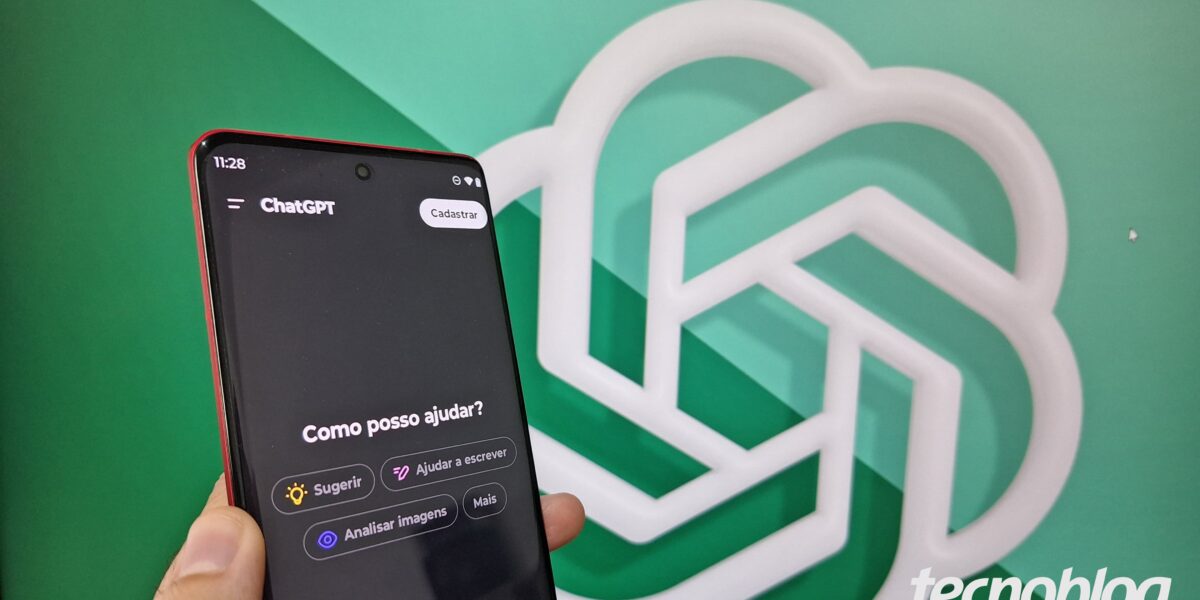
The European Commission has classified ChatGPT as a VLOSE under the DSA because it has surpassed an average of 45 million monthly users in the European Union. The designation places it in a category designed for online services whose reach can create systemic risks in information access, illegal content and user protection. The underlying development was reported by Tecnoblog.
OpenAI, Reddit and Roblox have four months to comply, with the deadline falling in December 2026. The consequences for non-compliance can be substantial: sanctions may reach 6% of global annual revenue and can include suspension within the European bloc. For ChatGPT, the important policy message is that a conversational interface can now be regulated as a major search and discovery service. This places greater emphasis on systemic-risk management, content controls, protection of minors, transparency and accountability at scale.
For corporate buyers, the designation should be read as a market signal. Regulators are not waiting for AI assistants to resemble traditional search engines in every technical detail. They are responding to the role these systems play in how users find, interpret and act on information.
Why This Matters for Business: AI Compliance Strategy
A strong AI compliance strategy must now cover supplier resilience alongside privacy, security and accuracy. Enterprises often assess generative AI through narrow questions: Does it expose confidential data? Does it hallucinate? Is the contract acceptable? Those questions remain essential, but they are insufficient when a single assistant becomes embedded across high-volume workflows. Regulatory intervention can change the service itself, its available features, its regional terms or the evidence an organization must retain about use.
The commercial implications are particularly significant for SaaS providers, customer-service teams, digital marketers, media businesses and ecommerce platforms. These organizations use conversational AI as a layer for discovery, recommendation and content creation. Regulated sectors such as financial services, healthcare, insurance and legal services will also face greater pressure from clients and auditors to demonstrate governance over the models their employees use, even when those companies are not directly designated under the DSA.
- Continuity risk: a compliance-driven product change can disrupt research, support and content workflows built around one model.
- Regional fragmentation: EU requirements may produce different features, safeguards or access conditions across markets.
- Audit pressure: organizations may need clearer evidence of which tools were used, by whom and for what business purpose.
- Vendor concentration: dominant-model convenience can become expensive when switching options have not been designed in advance.
The result is a more competitive opening for private enterprise AI providers, European alternatives, observability platforms, AI security tools and prompt-management services that offer control without eliminating productivity gains.
Practical Applications for AI Compliance Strategy
The next 90 days should focus on making AI usage visible and replaceable. IT, Legal and Procurement should jointly create an inventory of generative AI use cases, including employees who rely on free consumer tools outside formally approved platforms. The inventory should identify the process supported, the data involved, the business owner, the geographic footprint, the provider and the operational consequence if access or functionality changes. This is not paperwork for its own sake; it is the baseline for decisions about continuity and risk.
Build alternatives for critical workflows
For internal search, customer support and content generation, assign at least one approved alternative to the primary AI provider. A customer-support team, for example, should be able to move to a different approved model or a narrower private workflow if its current assistant faces regional restrictions. Marketing teams should preserve source content, prompt libraries and approval processes outside a single vendor interface. Internal research teams should avoid treating one public assistant as their only route to knowledge discovery.
Centralize access and evidence
Deploy an enterprise access and logging layer for AI tools where possible. The goal is to manage permissions, reduce uncontrolled use, maintain records and apply consistent handling rules for sensitive data. Procurement should require contractual commitments on service continuity, data residency and advance notice of regulatory changes that could materially alter service delivery. Legal teams should translate those clauses into practical escalation paths rather than leaving them as boilerplate.
- Map all generative AI tools and unofficial employee usage.
- Classify each use case by criticality, data sensitivity and EU exposure.
- Approve a primary provider and an alternative for each critical workflow.
- Test a switch scenario before an external disruption forces one.
This approach does not require abandoning leading models. It requires operating them with the same discipline applied to cloud, cybersecurity and other strategic technology suppliers.
My Take
The VLOSE designation is the clearest indication yet that general-purpose AI is moving into the category of public information infrastructure. That is the right strategic interpretation, even for companies outside Europe. An assistant that mediates discovery, recommendations and explanations at mass scale influences what people know and how they make decisions. Treating it as a simple software feature understates its economic and social role.
My view is that the winners will not necessarily be the organizations with access to the most popular model. They will be the organizations with the best governance architecture around multiple models: clear access controls, usable logs, approved data practices, alternative suppliers and tested fallback processes. This favors vendors that can sustain legal, audit, safety and moderation capabilities at scale, while also creating room for European and private providers that can compete on control and deployment flexibility.
Over the next six to twelve months, expect more enterprise contracts to include AI-specific continuity language, regional service commitments and obligations to notify customers of material regulatory changes. AI governance will move from policy documents into procurement scorecards and operational resilience planning.
What to Watch
Watch how OpenAI adjusts its controls and product experience to meet the DSA deadline, particularly around risk management, transparency, content safeguards and protections for minors. Also watch whether EU compliance produces feature differences between Europe and other regions. Those differences may reveal where regulatory obligations are creating meaningful operational friction for providers and users.
Business leaders should also monitor whether major SaaS, customer-service and commerce platforms that embed conversational AI begin passing more governance responsibilities to enterprise customers. The critical question is not only which model performs best today, but which suppliers can provide stable, auditable and regionally reliable service as AI regulation matures.
Source: Tecnoblog, https://tecnoblog.net/noticias/europa-agora-trata-o-chatgpt-como-um-mecanismo-de-busca/.
ChatGPT’s new European classification should prompt a practical reset in enterprise AI planning. Productivity gains remain real, but convenience cannot be the only supplier-selection criterion when the underlying service is becoming regulated information infrastructure. Companies should preserve choice, build evidence and rehearse alternatives before a compliance change exposes an untested dependency. The most resilient organizations will not predict every regulatory outcome; they will design operations that can absorb change without losing customer trust or business momentum. Which AI-dependent workflow in your organization needs a tested alternative first?
Leia este artigo em Português: Versão em Português